Water Heater Leaking: What to Do Right Now
Cut power or gas before you touch it
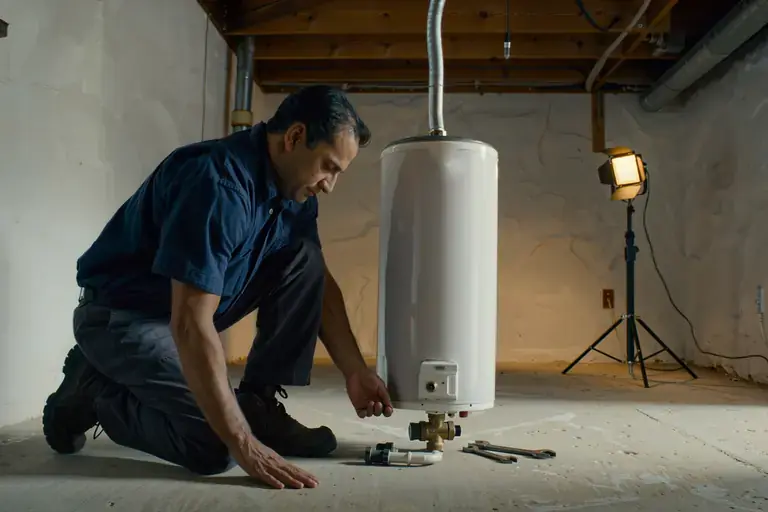
Do this now
- Electric heater: turn off its breaker before touching anything. Never work around an electric water heater with the power on.
- Gas heater: turn the control to off. If the unit has been under water, don't try to operate it at all.
- Close the cold water valve on top of the heater to stop the tank refilling and feeding the leak.
- Keep people away from the water. Tank water can be scalding: water at 140 degrees burns skin in about six seconds.
- If the leak is from the temperature and pressure relief valve, treat it as a warning, not a drip to plug. That valve exists to vent excess heat and pressure, and a tank that can't relieve pressure can rupture.
Can you fix it yourself?
Turning off power or gas and closing the cold inlet are homeowner moves. A drip from a loose drain valve is sometimes just a tightening. But a leak from the tank body means the tank is done, a weeping relief valve needs its cause diagnosed, and in most metro Atlanta cities swapping a water heater needs a permit (Roswell's building FAQ, for one, answers that question with a flat yes). This is one of the most worthwhile calls to a licensed plumber.
When to call a pro
- Water is coming from the tank itself, not a fitting
- The relief valve keeps discharging
- You smell gas near the heater at any point. Leave first; see the gas smell page
- The heater is gas-fired and anything about the venting looks or smells off, since a yearly professional inspection of fuel-burning water heaters is standard CPSC advice
We're a referral directory, not a contractor; this button opens our request form.
What to ask the plumber
- Are you licensed in Georgia, and will you pull the plumbing permit my city requires?
- Tank or tankless, what sizes fit my gas line and venting, and what's the installed price difference?
- Does your price include hauling the old tank, a new pan and expansion tank if code requires one, and bringing the shutoffs up to code?
- What's the tank warranty versus the labor warranty?
Questions we hear
Is a leaking water heater an emergency?
A tank-body leak only gets worse, and a relief valve that keeps venting is a pressure warning. Shut off power or gas and the cold inlet, and get a plumber the same day. With the inlet closed you can usually still use cold water in the house.
What temperature should the thermostat be set to?
120 degrees. That's the setting the CPSC urges to avoid tap water scalds, and the US Department of Energy's home checklist gives the same number for saving energy. For a gas model, the CPSC says thermostats differ enough that it's worth calling your gas company for instructions.
Why does my gas water heater worry people about carbon monoxide?
Any fuel-burning appliance can produce carbon monoxide if it's not venting right. CPSC lists headache, dizziness, nausea and confusion among CO symptoms, and says to get outside to fresh air immediately and call 911 if you suspect poisoning. Atlanta Gas Light adds warning signs like stuffy air, soot fall and a hot draft at the draft hood.
Sources
Every number and local fact above comes from one of these, read 2026/10. Spot something out of date? Tell us.
- U.S. Consumer Product Safety Commission: Avoiding Tap Water Scalds
- University of Florida IFAS Extension: Energy Efficient Homes: Water Heaters
- Atlanta Gas Light: Severe Weather Safety
- Georgia Environmental Protection Division: Guidance to Homeowners for Preventing and Dealing With Frozen Water Pipes (rev. Feb. 2014)
- U.S. Consumer Product Safety Commission: Temperature and Pressure Relief Valves for Large Water Heaters Recalled by Watts (2009)
- City of Roswell: Building Division
- U.S. Department of Energy: Home Energy Checklist
- U.S. Consumer Product Safety Commission: Carbon Monoxide Information Center
- Atlanta Gas Light: Emergency Information
- U.S. Consumer Product Safety Commission: Inspect, Detect and Protect Against Carbon Monoxide Poisoning